
The healthcare industry is rapidly evolving with the adoption of digital technologies, and one area seeing remarkable transformation is Radiology Transcription Services. As diagnostic imaging becomes more advanced and widely used, the need for accurate, fast, and efficient documentation has grown significantly. Radiology transcription is no longer just about converting voice recordings into text—it is becoming a technology-driven process that enhances patient care and operational efficiency.
In today’s digital healthcare environment, Healthcare Radiology Transcription plays a crucial role in ensuring that imaging reports are documented clearly and delivered promptly. Radiologists depend on precise transcription to communicate findings, support diagnoses, and guide treatment decisions. As healthcare systems move toward automation and integration, transcription services are also adapting to meet these demands.
Digital transformation has redefined how Radiology Medical Record Documentation is created and managed. Traditional transcription methods, which relied heavily on manual processes, are being replaced by advanced tools such as artificial intelligence (AI), speech recognition, and cloud-based platforms.
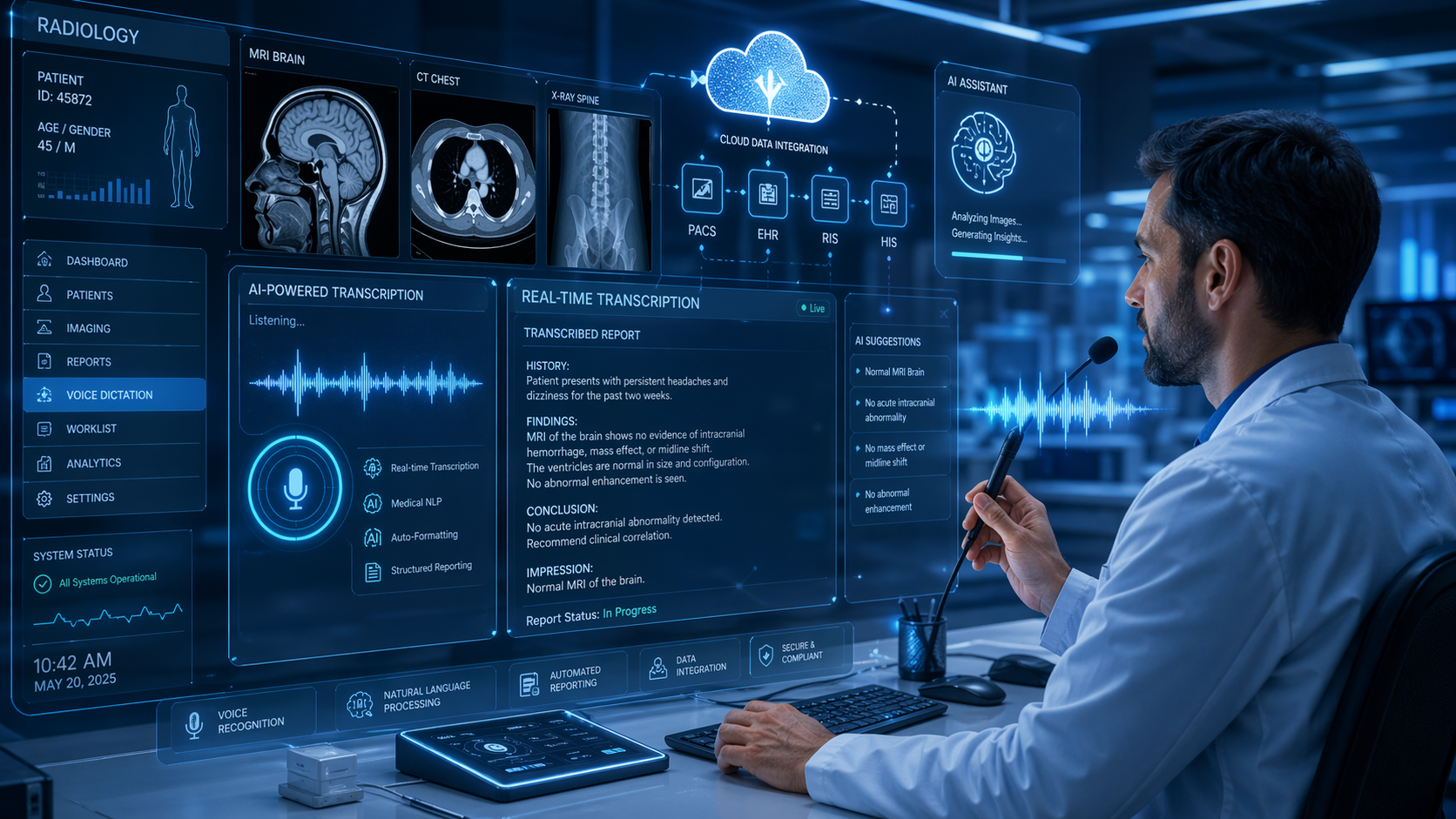
These technologies allow radiologists to dictate reports that are instantly transcribed and stored in digital systems. This not only speeds up the documentation process but also improves the accuracy and accessibility of reports. As a result, Healthcare Imaging Report Management has become more streamlined and efficient.
Artificial intelligence is one of the most significant drivers shaping the future of Radiology Transcription Services. AI-powered transcription systems can analyze speech patterns, recognize medical terminology, and produce highly accurate reports in real time.
Automation further enhances productivity by reducing repetitive tasks and minimizing human errors. For example, automated workflows can assign transcription tasks, track progress, and ensure timely delivery of reports. This integration of AI and automation is transforming Healthcare Radiology Transcription into a faster and more reliable process.
The rise of telemedicine has expanded the scope of Radiology Transcription Services. With healthcare providers offering remote consultations, radiologists often work from different locations, making digital transcription solutions essential.
Telemedicine relies heavily on accurate Radiology Medical Record Documentation to ensure seamless communication between healthcare professionals. Efficient transcription services support this by providing real-time access to reports, enabling quicker decision-making and improved patient care.
Standardization is becoming increasingly important in Healthcare Imaging Report Management. Structured reporting formats help maintain consistency across radiology reports, making them easier to interpret and analyze.
Accurate transcription is critical for avoiding miscommunication and ensuring patient safety. By using standardized templates and advanced tools, Radiology Transcription Services can deliver consistent and error-free documentation. This not only improves clinical outcomes but also enhances the overall quality of healthcare services.
One of the key advancements in Healthcare Radiology Transcription is its integration with electronic health record (EHR) systems. This integration allows radiology reports to be automatically updated in patient records, reducing duplication and improving workflow efficiency.
With seamless EHR integration, Radiology Medical Record Documentation becomes more accessible to healthcare providers, enabling better coordination and faster decision-making. This also strengthens Healthcare Imaging Report Management by ensuring that all patient data is centralized and easy to retrieve.
The modernization of Radiology Transcription Services offers several benefits:
These benefits highlight the importance of adopting advanced transcription solutions in today’s healthcare landscape.
Despite its advantages, the future of Healthcare Radiology Transcription also presents certain challenges. Implementing advanced technologies requires significant investment and training. Additionally, maintaining data security and patient confidentiality remains a top priority.
There is also a need for skilled professionals who can review and edit AI-generated reports to ensure accuracy. While automation is improving efficiency, human expertise continues to play a vital role in Radiology Medical Record Documentation.
Even as technology advances, human transcriptionists remain essential in ensuring the quality of Healthcare Imaging Report Management. They provide critical oversight by reviewing reports, correcting errors, and maintaining clarity in complex cases.
The future of Radiology Transcription Services will likely involve a hybrid approach, where technology and human expertise work together to deliver the best results. This collaboration ensures both efficiency and accuracy in radiology documentation.
Looking ahead, the future of Healthcare Radiology Transcription is filled with exciting possibilities. Innovations such as real-time multilingual transcription, predictive analytics, and AI-driven decision support systems are expected to further enhance the field.
As digital healthcare continues to evolve, Radiology Medical Record Documentation will become more advanced, enabling better data analysis and improved patient care. Similarly, advancements in Healthcare Imaging Report Management will ensure that radiology reports are more accessible, organized, and actionable.
The future of Radiology Transcription Services in digital healthcare is both promising and transformative. With the integration of AI, automation, and cloud technologies, transcription processes are becoming faster, more accurate, and highly efficient.
As healthcare organizations continue to embrace digital transformation, Healthcare Radiology Transcription will remain a critical component in delivering high-quality patient care. By combining technological advancements with human expertise, the industry is set to achieve new levels of excellence in Radiology Medical Record Documentation and Healthcare Imaging Report Management.
They convert radiologist dictations into accurate written medical reports.
It ensures timely and accurate documentation for faster diagnosis and treatment.
It provides reliable records for clinical decisions and patient history tracking.
It involves organizing, storing, and accessing radiology reports efficiently.
It will be driven by AI, automation, and digital healthcare integration.