

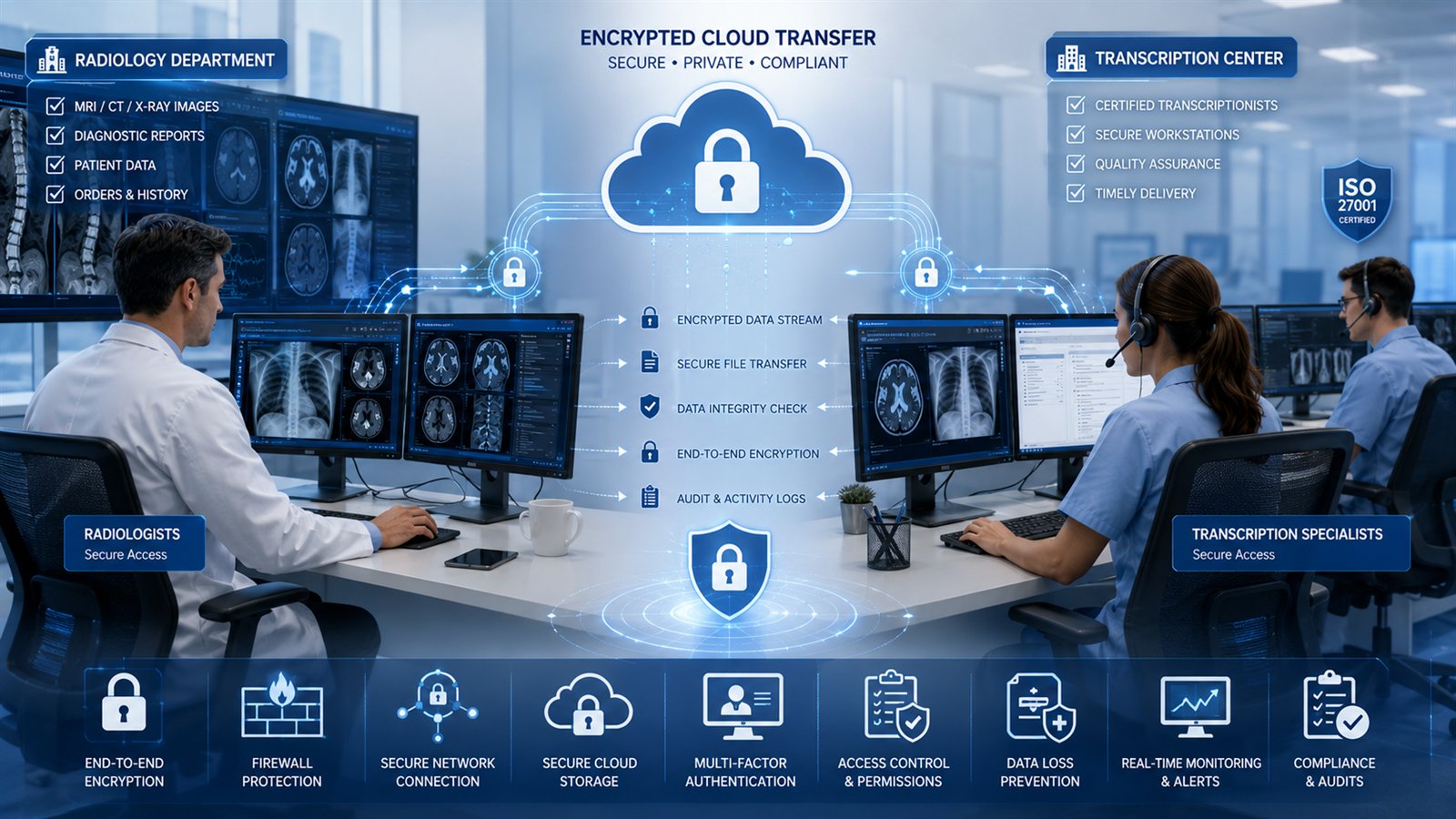
In today's digital healthcare environment, Radiology Transcription Services play a vital role in transforming dictated radiology findings into accurate, organized, and compliant reports. As radiology departments generate large volumes of patient data daily, ensuring secure data transfer during transcription has become more important than ever. Healthcare organizations must protect sensitive patient information while maintaining efficiency, accuracy, and compliance with industry regulations.
Radiology reports contain confidential patient information, diagnostic findings, physician interpretations, and treatment recommendations. Any unauthorized access, data breach, or transmission error can compromise patient privacy and create legal and financial consequences. This is why secure data transfer has become a critical component of modern radiology transcription processes.
Healthcare organizations handle highly sensitive information every day. Radiologists, physicians, hospitals, imaging centers, and transcription providers exchange patient records regularly. Without robust security measures, healthcare data can become vulnerable to cyberattacks, unauthorized access, and accidental exposure.
Secure data transfer ensures:
As radiology departments continue adopting digital technologies, secure transmission methods are no longer optional—they are essential.
The transition from paper-based documentation to digital healthcare systems has revolutionized medical imaging. Modern radiology departments rely on Picture Archiving and Communication Systems (PACS), Electronic Health Records (EHRs), and cloud-based storage solutions.
During this process, Radiology Report Transcription services help convert voice recordings into structured reports that can be shared across healthcare networks. Because these reports move through multiple systems, secure transfer protocols are necessary to prevent data leaks and unauthorized access.
Digital radiology offers numerous advantages:
Weak passwords, insufficient authentication controls, and poor access management can allow unauthorized users to view sensitive information.
Unencrypted files transmitted through unsecured networks can be intercepted by cybercriminals during transfer.
Healthcare remains one of the most targeted industries for ransomware attacks. A compromised transcription system can disrupt operations and expose patient data.
Accidental email transmissions, improper file sharing, and inadequate staff training can result in data breaches.
While cloud platforms offer convenience and scalability, improper configuration may expose healthcare records to security vulnerabilities.
Professional transcription providers use multiple layers of protection to safeguard patient information and maintain secure communication throughout the reporting process.
Encryption converts sensitive data into unreadable code during transmission.
Benefits include:
VPNs create secure connections between healthcare facilities and transcription providers, reducing the risk of unauthorized access.
Many transcription companies use HIPAA-compliant cloud environments that include:
Role-based access ensures that only authorized personnel can view, edit, or transfer radiology reports.
The best transcription companies implement comprehensive security frameworks to protect healthcare data.
| Security Measure | Purpose | Benefit |
|---|---|---|
| Data Encryption | Protects data during transfer | Prevents interception |
| Multi-Factor Authentication | Verifies user identity | Reduces unauthorized access |
| Secure Servers | Stores reports safely | Improves compliance |
| Audit Trails | Tracks user activity | Enhances accountability |
| VPN Connectivity | Secures communication | Protects remote access |
| Regular Security Audits | Identifies vulnerabilities | Strengthens protection |
These safeguards ensure that patient information remains confidential throughout the transcription process.
HIPAA regulations establish standards for protecting patient health information in the United States. Any provider offering Radiology Interpretation Transcription services must follow strict guidelines regarding data security and privacy.
HIPAA compliance includes:
Organizations that fail to comply may face substantial penalties, reputational damage, and legal consequences.
Security and efficiency often work together. A properly secured transcription workflow allows healthcare providers to focus on patient care instead of worrying about data breaches.
Secure systems improve:
Automated secure transmission channels enable quicker movement of reports between radiologists and healthcare providers.
Authorized personnel can access reports safely from different locations without compromising security.
Integrated secure platforms eliminate manual processes and reduce documentation errors.
Reliable transfer systems ensure reports arrive intact without corruption or missing information.
As a result, Radiology Workflow Documentation becomes more streamlined, organized, and efficient.
AI-powered monitoring systems can detect unusual activity and potential threats in real time.
Blockchain provides tamper-resistant records that improve data integrity and transparency.
Biometric verification and adaptive authentication methods add additional layers of protection.
Modern systems continuously monitor workflows to ensure regulatory compliance and identify vulnerabilities before they become serious problems.
These innovations are shaping the future of secure radiology transcription.
When choosing a radiology transcription provider, verify that they offer end-to-end encryption, HIPAA-compliant workflows, multi-factor authentication, and documented security policies. Security should be evaluated alongside accuracy and turnaround time to ensure complete protection of patient information.
Selecting the right transcription partner requires careful evaluation of both security and performance standards.
Look for providers that offer:
A trusted provider helps healthcare organizations maintain patient privacy while improving reporting efficiency.
Secure data transfer has become a fundamental requirement in modern radiology documentation. As healthcare organizations increasingly rely on digital systems, protecting patient information during every stage of the transcription process is essential. High-quality Radiology Transcription Servicesnot only improve report accuracy and turnaround times but also ensure that sensitive medical information remains protected from evolving cybersecurity threats.
By implementing encrypted communication, secure cloud platforms, access controls, and HIPAA-compliant workflows, healthcare providers can confidently manage Radiology Report Transcription, enhance Radiology Workflow Documentation, and support accurate Radiology Interpretation Transcription. Investing in secure transcription solutions ultimately strengthens patient trust, improves operational efficiency, and supports better healthcare outcomes.
Radiology Transcription Services convert dictated radiology findings and interpretations into accurate, structured medical reports for healthcare providers.
Secure data transfer protects patient information from unauthorized access, cyberattacks, and accidental disclosure while ensuring regulatory compliance.
Encryption converts data into unreadable code during transmission, ensuring that only authorized users can access the information.
HIPAA establishes standards for protecting patient health information and requires secure handling, transmission, and storage of medical records.
Organizations should evaluate HIPAA compliance, encryption methods, access controls, security certifications, experience, and quality assurance processes.