

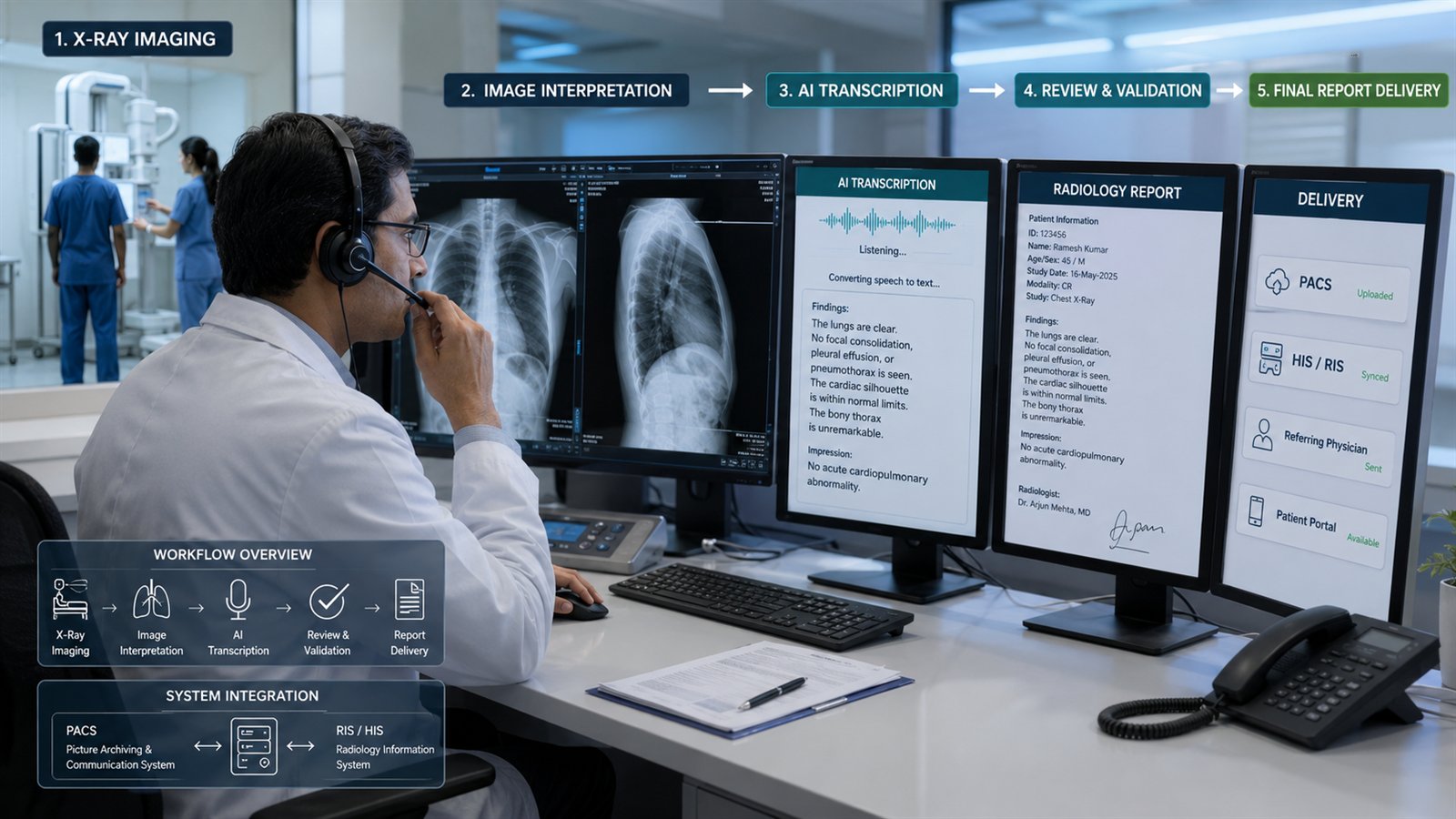
X-ray imaging is one of the most commonly used diagnostic procedures in healthcare facilities worldwide. From detecting fractures and infections to identifying lung diseases and internal abnormalities, X-rays provide fast and reliable medical imaging solutions. However, accurate diagnosis depends not only on imaging quality but also on proper interpretation and documentation. This is where Radiology Transcription Services become essential in the healthcare industry.
The process of converting radiologist dictations into clear, organized, and accurate reports is known as radiology transcription. Healthcare organizations rely on professional Healthcare Radiology Transcription solutions to improve documentation accuracy, maintain patient records, and support better clinical communication.
Modern hospitals and diagnostic centers handle a large number of imaging studies every day. Efficient transcription workflows help radiologists save time while ensuring healthcare providers receive accurate reports quickly. Proper documentation also helps physicians make informed treatment decisions without delay.
X-ray interpretation plays a major role in identifying medical conditions at an early stage. Radiologists carefully review images to detect fractures, infections, tumors, joint abnormalities, or respiratory conditions. Their findings are then documented into detailed medical reports for physicians and specialists.
Accurate interpretation helps healthcare providers:
Without proper reporting, healthcare providers may face delays in diagnosis and treatment. This is why reliable Radiology Interpretation Transcription services are important for maintaining clinical accuracy and workflow efficiency.
The X-ray reporting workflow involves multiple stages, each requiring attention to detail and professional expertise.
The process begins when a physician recommends an X-ray examination. Patient information, symptoms, and medical history are entered into the healthcare system before imaging is performed.
Important details include:
These details help radiologists understand the patient’s condition during image analysis.
Radiologic technologists perform the imaging procedure using digital X-ray systems. Proper patient positioning and high-quality imaging are important for accurate diagnosis.
Common X-ray procedures include:
Digital imaging technology has improved image clarity and reduced report turnaround time significantly.
After imaging is completed, radiologists review the scans carefully. They evaluate image quality and analyze abnormalities based on patient symptoms and clinical history.
During interpretation, radiologists focus on:
Radiologists detect fractures, infections, organ issues, or other medical conditions.
Previous imaging studies may be compared to monitor disease progression.
Radiologists summarize observations and provide impressions for physicians.
This stage is highly important because treatment decisions depend on accurate interpretation and reporting.
Once interpretation is completed, radiologists dictate their findings using digital dictation systems or speech recognition software. These recordings are then processed through professional X-Ray Report Transcription Services.
Medical transcriptionists listen carefully to the audio files and convert them into structured reports. They ensure that all medical terminology, findings, and recommendations are documented correctly.
The transcription process includes:
Professional Healthcare Radiology Transcription teams help healthcare providers maintain accurate patient records while reducing administrative workload.
Radiology reports are critical medical records used by physicians, specialists, and hospitals. Even small documentation errors can affect patient treatment plans.
Benefits of accurate transcription include:
Clear reports help physicians understand patient conditions quickly.
Timely documentation supports quicker diagnosis and treatment.
Accurate reports contribute to effective healthcare decisions.
Detailed documentation helps maintain healthcare compliance standards.
Radiologists can focus more on diagnosis instead of paperwork.
Reliable Radiology Transcription Services improve workflow management and operational efficiency across healthcare organizations.
Advanced technology has transformed the radiology reporting process over the years. Healthcare facilities now use integrated digital systems to improve productivity and reduce reporting delays.
Many radiologists use voice recognition systems to dictate findings faster. However, speech recognition software may produce errors, making professional review necessary.
Picture Archiving and Communication Systems (PACS) allow radiologists to store and access digital images efficiently.
EHR systems help integrate radiology reports directly into patient medical records for faster access.
AI-powered tools assist radiologists in identifying abnormalities and improving workflow accuracy.
Despite technological advancements, skilled transcription professionals remain essential for ensuring report quality and precision.
Healthcare organizations often face challenges while managing radiology documentation workflows.
Radiology reports contain specialized medical language that requires professional expertise.
Background noise or unclear dictation may create transcription difficulties.
Emergency cases require immediate report turnaround.
Automated systems may misinterpret medical terms and abbreviations.
Professional Radiology Interpretation Transcription providers help healthcare facilities overcome these challenges through experienced transcription teams and quality assurance processes.
Many healthcare providers outsource transcription tasks to improve efficiency and reduce operational costs.
Advantages include:
Outsourcing also allows healthcare providers to focus more on patient care while professional transcription teams manage documentation tasks effectively.
The X-ray interpretation and reporting workflow is an essential part of modern healthcare operations. From image acquisition and radiologist review to final report transcription, every stage requires accuracy, speed, and professional coordination.
Professional Radiology Transcription Services help healthcare providers maintain organized medical records, improve communication, and enhance patient care quality. Reliable X-Ray Report Transcription Services also support faster diagnosis and efficient clinical workflow management.
As healthcare technology continues to evolve, the demand for accurate Healthcare Radiology Transcription and expert Radiology Interpretation Transcription services will continue to grow across hospitals, clinics, and diagnostic imaging centers worldwide.
X-ray interpretation is the process where radiologists analyze imaging scans to identify medical conditions and abnormalities.
They help convert radiologist dictations into accurate, structured, and timely medical reports.
These services specialize in transcribing X-ray findings into professional diagnostic reports.
It improves reporting speed, reduces errors, and enhances healthcare documentation efficiency.
It is the process of documenting radiologists’ diagnostic interpretations into written medical records.