

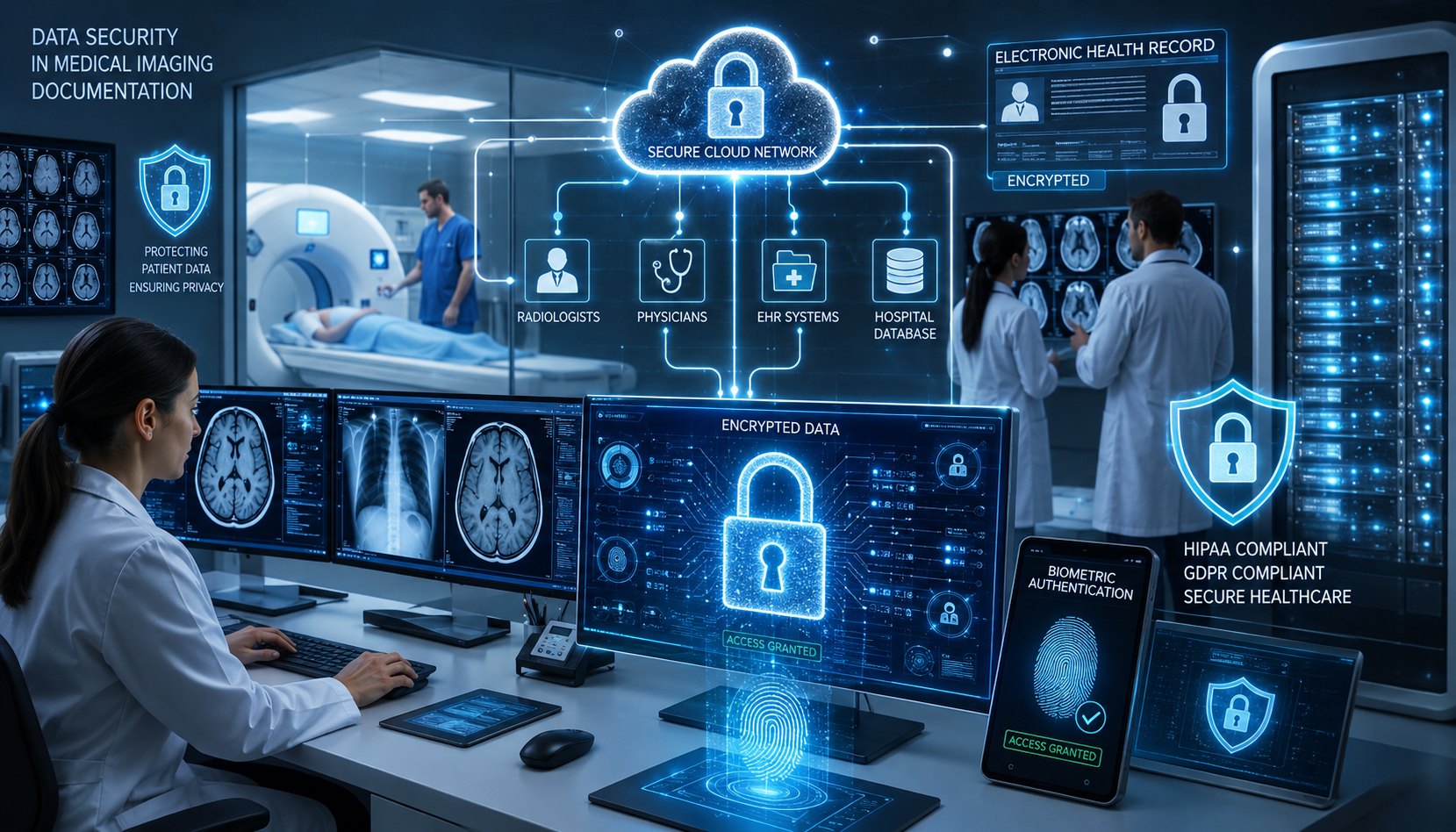
Medical imaging plays a critical role in modern healthcare. Every day, healthcare providers generate thousands of radiology reports, diagnostic images, and patient records that must be accurately documented, stored, and shared. As digital healthcare continues to expand, protecting sensitive patient information has become a top priority. Data breaches, unauthorized access, and cyber threats can compromise patient privacy and lead to significant financial and legal consequences for healthcare organizations.
This is where Medical Imaging Documentation Services become essential. These services help healthcare facilities maintain accurate imaging records while ensuring that patient information remains secure and compliant with industry regulations. From report creation to secure storage and retrieval, medical imaging documentation providers implement robust security measures to protect healthcare data.
Medical imaging records contain highly sensitive information, including patient demographics, diagnostic findings, physician notes, and treatment recommendations. Unauthorized access to this information can result in identity theft, medical fraud, and privacy violations.
Healthcare organizations are attractive targets for cyber criminals because medical records often contain valuable personal and financial information. A single security breach can damage an organization's reputation, disrupt operations, and result in substantial penalties.
By implementing secure Medical Imaging Documentation Services, healthcare providers can reduce risks and ensure that patient information remains confidential, accurate, and accessible only to authorized personnel.
Modern healthcare facilities rely on Medical Imaging Documentation Services to manage large volumes of diagnostic imaging records efficiently.
These services include:
Professional documentation teams use advanced security protocols to safeguard information throughout the documentation life cycle. This ensures that imaging data remains protected from creation to long-term storage.
Accurate reporting is a vital part of healthcare documentation. Medical Radiology Transcription converts physicians’ dictated observations into structured and readable reports. While accuracy is important, security is equally critical during the transcription process.
Secure transcription workflows typically include:
These measures help ensure that sensitive radiology information is protected at every stage of the transcription process.
Healthcare organizations increasingly depend on Radiology Medical Transcription Services to manage diagnostic reporting efficiently. Reputable transcription providers implement comprehensive security frameworks designed to protect patient information.
Accurate data entry is essential for maintaining reliable healthcare records. Medical Imaging Data Entry Services support healthcare providers by organizing patient information, imaging results, and clinical documentation in structured formats.
Because data entry professionals frequently handle sensitive information, strict security practices must be followed.
Secure data entry processes typically include:
These safeguards help prevent errors while maintaining the integrity and security of patient records.
Healthcare organizations face numerous cybersecurity challenges. Understanding these risks is the first step toward effective protection.
Cybersecurity Threats Include:
Malicious software can lock healthcare organizations out of critical systems until a ransom is paid.
Cybercriminals use deceptive emails to gain access to login credentials and confidential information.
Unauthorized actions by employees or contractors can compromise sensitive patient data.
Weak security controls may allow hackers to access protected healthcare records.
Outdated software and unpatched systems can create security gaps that attackers exploit.
By partnering with experienced Medical Imaging Documentation Services providers, healthcare facilities can strengthen defenses against these threats.
Staff members should receive regular training on cybersecurity awareness, password management, and data protection protocols.
All patient information should be encrypted during transmission and storage to prevent unauthorized access.
Routine audits and vulnerability assessments help identify potential weaknesses before they become major issues.
Organizations should implement role-based access controls to ensure that employees only access information necessary for their job responsibilities.
Healthcare providers should work with trusted vendors offering secure Medical Radiology Transcription and documentation solutions.
Patients expect healthcare providers to protect their personal information. Strong security practices help build confidence and trust.
Secure documentation processes support compliance with healthcare privacy regulations and industry standards.
Well-organized documentation systems improve workflow efficiency and reduce administrative burdens.
Preventing security incidents helps organizations avoid costly penalties, legal expenses, and operational disruptions.
Accurate and secure documentation supports informed clinical decision-making and improved patient care.
Pro Tip: Choose providers that offer encrypted communication channels, audit trails, role-based access controls, and regular security audits. These features significantly enhance the protection of sensitive imaging and patient data while maintaining compliance and operational efficiency.
As healthcare technology continues to evolve, data security will remain a central focus. Artificial intelligence, cloud-based storage solutions, and advanced cybersecurity technologies are transforming the way healthcare organizations manage imaging records.
Future-ready Radiology Medical Transcription Services and Medical Imaging Data Entry Services will continue to integrate advanced security controls that protect patient information while improving workflow efficiency.
In conclusion, protecting patient information is a fundamental responsibility for healthcare providers. Secure Medical Imaging Documentation Services, accurate Medical Radiology Transcription, reliable Radiology Medical Transcription Services, and efficient Medical Imaging Data Entry Services all contribute to maintaining data integrity, regulatory compliance, and patient trust. By implementing comprehensive security measures and partnering with experienced service providers, healthcare organizations can safeguard sensitive medical information while delivering high-quality patient care.
Medical Imaging Documentation Services involve creating, managing, storing, and maintaining radiology and diagnostic imaging records securely and accurately.
Medical Radiology Transcription converts physician dictations into structured reports, improving documentation accuracy, accessibility, and turnaround times.
Radiology Medical Transcription Services ensure accurate reporting, faster documentation, improved compliance, and enhanced patient care outcomes.
These services use encryption, secure access controls, audit trails, confidentiality protocols, and regular security monitoring to protect patient data.
Organizations can prevent breaches through staff training, encryption, access management, security audits, and partnerships with secure documentation service providers.